Vertical moss wall art or tabletop plants for compact rooms
@roomandroot
November 25, 2026 · 8 min read
Choosing between vertical moss art and tabletop greenery
When a living space is short on floor area but long on bare walls, the usual impulse is to reach for a potted plant and a side table. For many rooms, though, that combination creates visual clutter rather than calm. Two alternatives have gained attention among people who want natural texture without sacrificing floor space: vertical moss wall art and a curated set of tabletop plants. Each approach changes a room’s proportions in a different way, and the right choice depends on the light, the available wall area, and how much hands-on care you want to give.
This piece compares the two strategies side by side, explains where each excels, and helps you decide which direction suits your room. The goal is a clear, practical framework, not a ranking of products or brands.
Vertical moss wall art: what it is and how it works
Vertical moss wall art uses preserved moss that has been stabilised so it stays green and soft without soil, water, or sunlight. The moss is attached to a backing board or a frame, and the whole piece hangs on a wall like a painting. Because the moss is already preserved, it does not grow, shed, or need trimming. It keeps its colour for years if it is kept out of direct sun and away from very dry air.
For someone living in a small apartment or working in a compact office, this kind of wall-mounted decor frees every inch of horizontal surface. A narrow hallway that cannot fit a console table can hold a vertical moss panel and feel like a garden corridor. An open wall in a rented flat where drilling is allowed becomes a natural focal point without taking up any floor area. The preserved moss also serves as a subtle acoustic buffer, softening sound in a room with hard floors and bare walls.
The main trade-off is that you cannot change the arrangement. Once the moss is fixed in its frame, that is the composition you live with. Some people enjoy the permanence; others miss being able to rotate plants or swap in a new variety. Another point to consider is weight. A large moss panel can be heavy, so you need a sturdy wall anchor. A lightweight frame with a thin moss layer is easier to hang but may look less substantial.
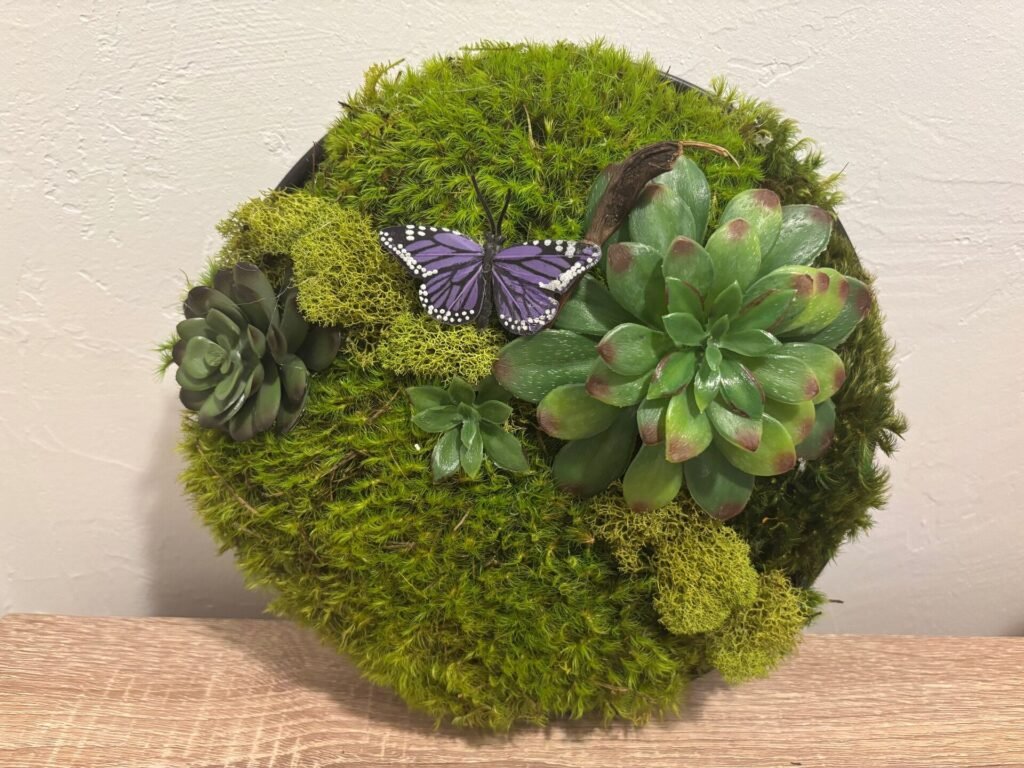
From a design standpoint, vertical moss art reads as a single block of colour and texture. It can fill a large wall without the busy look of multiple small pots, and it never drops leaves or spills soil. For people who want a low-maintenance way to bring nature indoors but dislike the look of fake plants, preserved moss offers a middle ground that looks convincingly alive.
Tabletop plants for limited spaces
Tabletop plants are the more traditional route. A small pot on a windowsill, a shelf, or a desk adds a living element that changes with the seasons. The range is enormous: succulents that need almost no water, ferns that thrive in bathroom humidity, trailing vines that soften a bookshelf. For someone who enjoys the ritual of watering and checking growth, tabletop plants provide a daily connection to nature that a fixed wall piece cannot.
In a compact room, the key is to use vertical space for the plants themselves. A tiered plant stand or a wall-mounted shelf system can hold several pots in the footprint of a single saucer. This approach lets you mix shapes and heights, creating a mini garden that can be rearranged whenever you want a fresh look. It also allows you to move plants to follow the light, which is important in rooms with only one window.
The downside is the care requirement. Every plant has its own light, water, and humidity needs, and a collection of a dozen pots means a dozen separate schedules. Overwatering is the most common mistake in small spaces, especially when pots lack drainage holes. Pests such as fungus gnats or spider mites can spread quickly when plants are crowded on a single shelf. And if you travel often, you need a reliable watering plan or a self-watering system.
Another practical point is mess. Soil can blow off a dry pot, water can spill during watering, and dead leaves need to be removed. None of these are dealbreakers, but they are real factors when a room is small and every surface is visible.
When each option suits best
Choose vertical moss art when:
- You want a large natural element without giving up floor or table space.
- The room has low light or no windows (a hallway, a basement office, a windowless bathroom).
- You prefer a set-and-forget solution with no watering, pruning, or repotting.
- The wall is a prominent blank area that needs a single statement piece.
- You have allergies or pets that make live soil plants a concern.
Choose tabletop plants when:
- You enjoy caring for living things and want the variety of different species.
- The room has good natural light or you are willing to use grow lights.
- You want to rearrange the greenery often or move plants between rooms.
- You have shelf or windowsill space that would otherwise stay empty.
- You like the look of trailing or climbing plants that need to hang or climb.
Combining both for a balanced look
Many interiors benefit from a blend. A preserved moss panel on the main wall provides a constant backdrop of green texture, while a few carefully chosen tabletop plants on a nearby shelf add life and variation. The moss anchors the room visually, and the plants bring movement and change. This combination works particularly well in a compact office, where the wall piece keeps the space feeling calm and the desk plant offers a living companion during working hours.
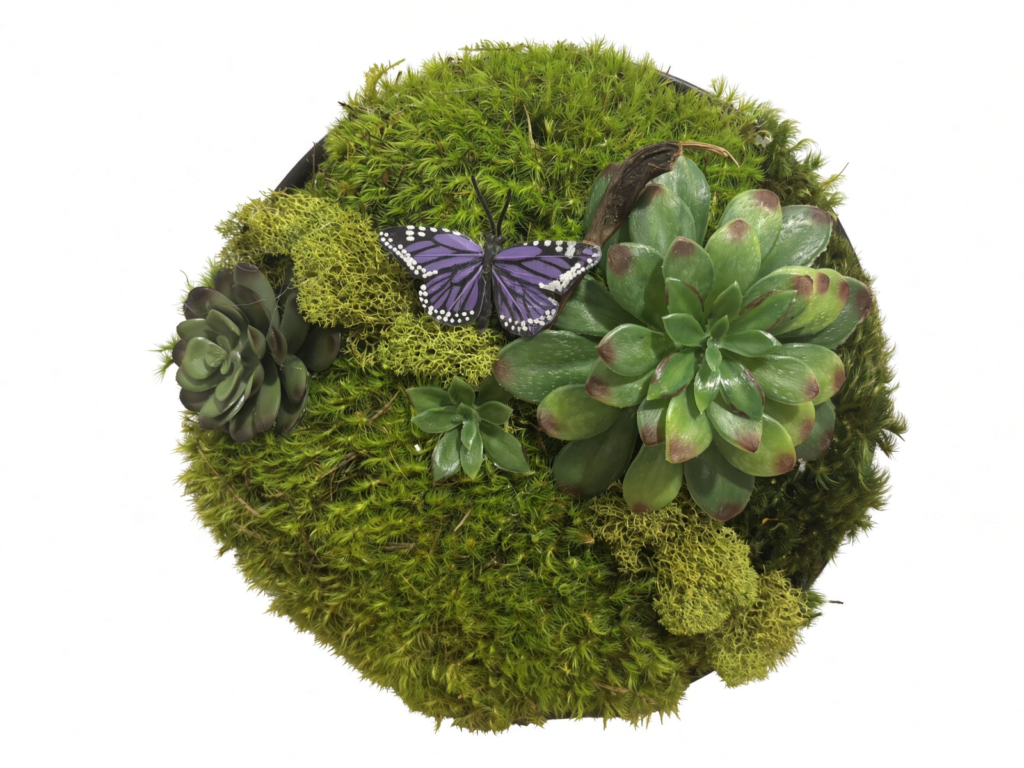
When you combine the two, think about colour and texture. The moss is usually a deep, even green, so the tabletop plants can introduce lighter greens, silvers, purples, or even flowers. A trailing pothos or a spiky snake plant contrasts well with the soft matte surface of the moss. Keep the pots simple, plain terracotta, matte ceramic, or woven baskets, so they do not compete with the moss art for attention.
For those who want a truly minimalist setup, a single large moss panel paired with one small tabletop succulent on a low shelf can be enough to transform a room’s atmosphere without creating visual clutter. This is a common approach in small apartments where every object has to earn its place.
Practical considerations before deciding
Before you commit to either approach, look at your room’s conditions. Is there enough wall space for a moss panel of a meaningful size? Measure the area and imagine a rectangle of green filling that space. If the wall is narrow or interrupted by windows, a vertical moss piece may feel cramped. In that case, a few well-placed tabletop plants on a tiered stand could be a better fit.
Light is another factor. Preserved moss does not need light, but it can fade if exposed to direct sun for hours each day. Tabletop plants, on the other hand, depend on the light that reaches their spot. A north-facing room with a single small window may support only low-light plants such as snake plants or ZZ plants. A bright south-facing room can handle a wider range.
Humidity matters too. Preserved moss is stable in normal indoor humidity (30-60%). In very dry air, the moss can become brittle, though occasional misting helps. Tabletop plants from tropical regions need higher humidity, which can be a challenge in heated or air-conditioned rooms. Grouping plants together can raise local humidity, but that is harder to do in a small space.
Finally, think about your own time and temperament. If the idea of a watering schedule feels like a chore, vertical moss art is the more practical choice. If you find tending plants relaxing and you have the discipline to check on them regularly, tabletop plants will reward you with growth and change.

A note on style and room proportions
Both approaches affect how a room feels. A large vertical moss panel makes a wall feel closer and more textured, which can make a narrow room feel even narrower if the panel is too dark. In a small rectangular room, a lighter-toned moss or a panel with a mix of green and beige can keep the space feeling open. Tabletop plants, because they are scattered at different heights, tend to draw the eye around the room and can make a small space feel layered rather than flat.
For anyone who wants the calming effect of greenery without the upkeep of a live collection, vertical moss art is a strong option. It is a form of space saving nature inspired wall decor that fits neatly into a modern interior. At the same time, a well-chosen set of tabletop plants remains the most flexible way to bring nature into a compact room. The best decision comes from matching the approach to the room’s light, the wall space, and the amount of care you want to give.
Ultimately, the choice between vertical moss wall art and tabletop plants is about lifestyle as much as design. Both can transform a compact room into a retreat. The right one is the one you will enjoy living with every day. If you are still unsure, start with a small preserved moss piece on one wall and a single hardy tabletop plant on a shelf, and see how the combination feels. That gentle introduction to space saving nature inspired wall decor can help you decide whether to expand the moss panel or build a collection of pots.